Get this book

Amazon
Books & Kindle

Audible
Audiobook

Bookshop.org
Support indie stores
Affiliate links — I earn a small commission if you buy, at no extra cost to you. Learn more
Data via openlibrary
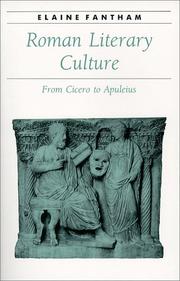
Roman Literary Culture
No ratings yet
Scholars of ancient literature have often focused on the works and lives of major authors rather than on such questions as how these works were produced and who read them and under what circumstances. In Roman Literary Culture Elaine Fantham fills that gap by examining the changing social and historical context of literary production in ancient Rome and its empire. Fantham discusses the habits of Roman readers and developments in their means of access to literature, from booksellers and copyists to pirated publications and libraries. She examines the issues of patronage and the utility of literature. She shows how the constraints of the physical object itself - the ancient "book" - influenced the practice of both reading and writing. And she explores the ways in which ancient criticism and critical attitudes reflected cultural assumptions of the time. Beginning with Cicero and his older contemporary Varro, Roman Literary Culture reviews both the public and the more private literary forms of the Augustan Age, when an elite reared on the primacy of Greek culture first confronted - and took pride in - their Roman literary inheritance. By the first century A.D., Fantham explains, Roman models dominated, and a new readership was evolving which included women and non-elite readers in the provinces who benefitted from a newly emerging commercial book trade. The second century brought a recurrence of Greek influence, as celebrated Greek rhetoricians and performers gave rise to a hybrid culture in which Greek and Latin values intertwined. The book concludes with a look at the ecumenical spread of Latin and its perpetuation through Christian literature.
Get this book
Amazon
Books & Kindle
Audible
Audiobook
Bookshop.org
Support indie stores
Affiliate links — I earn a small commission if you buy, at no extra cost to you. Learn more