Get this book

Amazon
Books & Kindle

Audible
Audiobook

Bookshop.org
Support indie stores
Affiliate links — I earn a small commission if you buy, at no extra cost to you. Learn more
Data via openlibrary
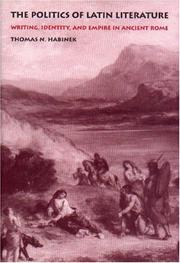
The politics of Latin literature
No ratings yet
This is the first book to describe the intimate relationship between Latin literature and the politics of ancient Rome. Until now, most scholars have viewed classical Latin literature as a product of aesthetic concerns. Thomas Habinek shows, however, that literature was also a cultural practice that emerged from and intervened in the political and social struggles at the heart of the Roman world. Habinek considers major works by such authors as Cato, Cicero, Horace, Ovid, and Seneca. He shows that, from its beginnings in the late third century B.C.E. to its eclipse by Christian literature six hundred years later, classical literature six hundred years later, classical literature served the evolving interests of Roman and, more particularly, aristocratic power. It fostered a prestige dialect, for example; it appropriated the cultural resources of dominated and colonized communities; and it helped to defuse potentially explosive challenges to prevailing values and authority.
Get this book
Amazon
Books & Kindle
Audible
Audiobook
Bookshop.org
Support indie stores
Affiliate links — I earn a small commission if you buy, at no extra cost to you. Learn more
Creators
More by Thomas N. Habinek
Full filmography →
More like this

The Early Latin Verb System
2007

Theophili Christophori Harles Supplementa ad breviorem notitiam litteraturae Romanae in primis ...
1817
Die entwicklung des naturgefuehls bei den Griechen und Roemern
1882
Studies in the Italian Renaissance
1955

Plinius der Jüngere und seine Zeit
2003
Saggi filologici
1902