Get this book

Amazon
Books & Kindle

Audible
Audiobook

Bookshop.org
Support indie stores
Affiliate links — I earn a small commission if you buy, at no extra cost to you. Learn more
Data via openlibrary
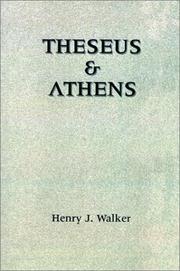
Theseus and Athens
No ratings yet
Theseus is celebrated as the greatest of Athenian heroes. Using an anthropological approach to Greek religion and society, Henry John Walker explores the world of Greek literature, myth, and political ideology to determine what Theseus meant to the Athenians at the height of their city-state in the fifth century B.C. Assembling material that has previously been scattered in scholarly works, Walker presents the evidence for the development of the myth and cult of Theseus in the archaic age. He then looks to major works of classical literature in which Theseus figures, probing the contradictions between the archaic, primitive side of his character and his refurbished image as the patron of democracy. His ambiguous nature as outsider, flouting accepted standards of behavior, while at the same time being a hero-king and a representative of higher ideals, is analyzed through his representations in the works of Bacchylides, Euripides, and Sophocles.
Get this book
Amazon
Books & Kindle
Audible
Audiobook
Bookshop.org
Support indie stores
Affiliate links — I earn a small commission if you buy, at no extra cost to you. Learn more
Creators
More like this
Etymologizing in Greek literature from Homer to Philo Judaeus
1928
Drama. Studien zum antiken Drama und seiner Rezeption. Neue Serie, Bd. 1: Humour, obscenity and aristophanes
In honorem memoriamque Stephani Oświecimski (1906-1990)
1995
Filosofski spisi
1997
Hē archaia Hellēnikē mitra
1987

The concept of spirit
1976